What is patellar tendonitis?
The patellar tendon is a thick strap that runs from the bottom of your kneecap to the top of your shin. It helps your thigh muscle straighten the knee. Each jump or landing pulls hard on it.
When the load is more than the tendon can recover from, it becomes sore and starts to break down. That irritation is patellar tendonitis. Some providers call the long-term form tendinopathy.
Jumper's knee and who gets it
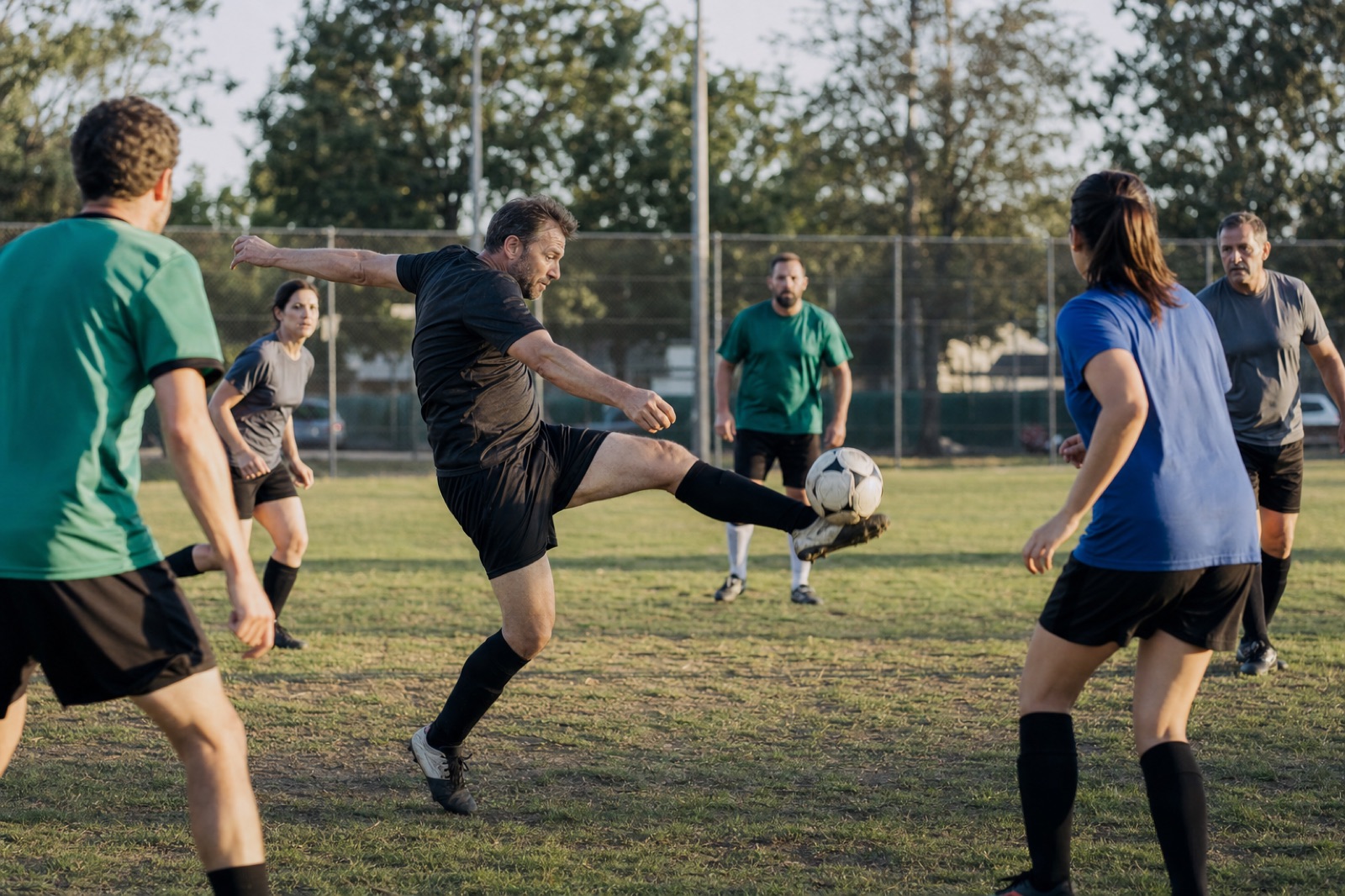
Jumper's knee is the common name for patellar tendonitis. It is frequent in basketball, volleyball, and soccer, and in runners who add hills or speed work. It can also follow a sudden increase in training load, such as a new season or a new program.
Symptoms of knee tendonitis
- Pain at the bottom edge of the kneecap
- Pain that starts as you warm up, eases, and then returns after activity
- Soreness on stairs, during squats, or when getting up from a chair
- Tenderness when you press on the tendon
How we assess the patellar tendon
We ask about your sport, your training, and when the pain started. Your provider presses along the tendon and watches how you squat and land.
Diagnostic ultrasound shows the tendon in real time. It can show thickening, small tears, and fluid. These findings show how far the problem has progressed and guide your plan.
How we treat patellar tendonitis in St. Louis
Most plans start with changes to load and a strength program for the tendon. When the tendon stays painful, we treat it with shockwave therapy, PRP, or prolotherapy. We place every injection with ultrasound guidance.
Your tendon visit at our Chesterfield office
At the Chesterfield office, your first visit is a consultation and exam with an ultrasound scan of the tendon. We review your training as well as the knee.
Your provider explains what the scan shows and builds a plan that keeps you as active as is safe. Before you go, we schedule your follow-up.
Questions about Patellar Tendonitis in St. Louis
Can I keep playing with patellar tendonitis?
Sometimes, with less load. Pain that gets worse each session is a sign to stop and have the tendon examined.
When should I see a doctor for jumper's knee?
Come in if the pain lasts more than a few weeks, affects daily life, or keeps returning each season.
Is rest enough?
Rest can calm the pain, but the tendon often needs a planned return to load. Your provider will help you set that plan and advise you when to add jumps back in.
Do teenagers get patellar tendonitis?
Yes. Young athletes in jumping sports often have pain below the kneecap. We assess young patients as well as adults.